Book Review: Theo of Golden by Allen Levi
I work part time in a small, independent bookstore, and when we kept selling out of a book called “Theo of Golden” Naturally, I grew curious, because I’m always interested in what book clubs are reading. I heard through the grapevine that the author had originally self-published the novel in 2023 and it sold so many copies through grassroots marketing that eventually it was picked up by Simon and Schuster in the fall of 2025.
Knowing how hard it is to publish a novel and get people to read it, never mind attracting the attention of a Big 5 publisher, I requested the book from my library. After a seven-week-long wait, it arrived and I dug in.
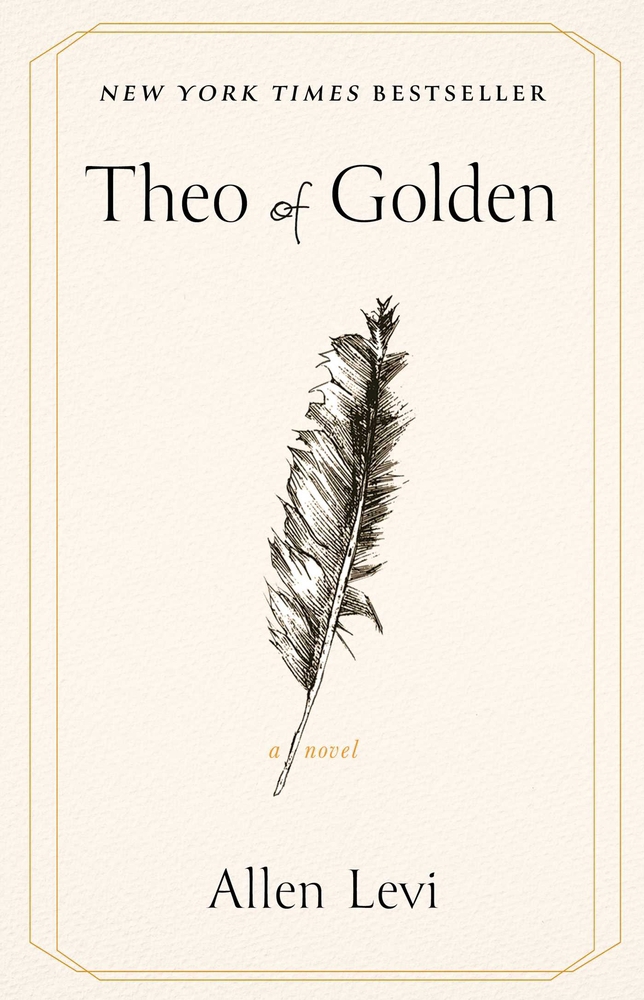
Here’s the synopsis:
His name is Theo. And he asks a lot more questions than he answers.
Theo visits the local coffeehouse, where ninety-two pencil portraits hang on the walls, portraits of the people of Golden done by a local artist. He begins purchasing them, one at a time, and putting them back in the hands of their “rightful owners.” With each exchange, a story is told, a friendship born, and a life altered.
A story of giving and receiving, of seeing and being seen, Theo of Golden is a beautifully crafted novel about the power of creative generosity, the importance of wonder to a purposeful life, and the invisible threads of kindness that bind us to one another.
“Theo of Golden” is unlike any other book I’ve ever read before, and I’ve read a lot. Levi tells the story through third-person omniscient narration, which is a good way to introduce characters to the reader while also holding small details back. Eighty-six-year-old Theo arrives in the fictional town of Golden, Georgia one spring day right before Easter, and he quickly endears himself to the small community as he sets about “bestowing” the portraits to their rightful owners. Theo, who will only say he is in town “on business” and originally hails from Portugal is a thoughtful listener, a man of endless resources, and a connoisseur of art and music.
I would describe this book as a cross between southern fiction, literary fiction, and book club fiction. I understand that the town of Golden was inspired by Columbus, Georgia, and Levi’s use of setting in the novel is excellent. As someone who enjoys small-town life, the descriptions of the restaurants, Mr. Ponder’s apartment that Theo rents, the Promenade, the Oxbow River, and the changing of the seasons were enchanting to read.
I learned about everything from classical music to the importance of art, wine making, birdwatching, cooking, literature, and much more, all through Theo and the people he meets and befriends during his year in Golden. There’s Asher, the quiet and humble artist who creates the pencil portraits for the coffee shop, The Chalice, Minnette, the sweet accountant who struggles to break free from her overbearing father, even in adulthood, Basil, the English teacher turned street musician, Simone, the music student whose never without his beloved cello, Tony, the owner of a local bookstore haunted by his memories of serving in Vietnam, to name a few.
As a writer, I was struck by this passage:
It might not make a lot of sense, but for anything to be good, truly good, there must be love in it. I’m not even sure I know fully what that means, but the older I get, the more I believe it. There must be love for the gift itself, love for the subject being depicted or the story being told, and love for the audience. Whether the art is sculpture, farming, teaching, lawmaking, medicine, music, or raising a child, if love is not in it—at the very heart of it—it might be skillful, marketable, or popular but I doubt it is truly good.
A mystery winds throughout the gorgeous prose. Who is Theo? What made him travel to Golden from his current home in New York City? Why does he now seem all alone in the world but is still determined to follow the Golden Rule? How does he have so much patience, such as the way he treats the homeless woman Ellen with such care and regard, encouraging her to use her talents to explore entrepreneurship?
I’ve read that Christian publishers originally hoped to pick up the rights to this book, but Levi preferred a mainstream path to mass publication.
There are Christian principles shared throughout the novel, but in my opinion, they don’t come across as “preachy.” After all, I consider myself a Christian and read a variety of genres. Theo talks about Heaven a lot to his new friends that he meets, but he’s not overbearing about it. He wants to know what others’ thoughts are about the concept and why or why not they believe. He strives to do good in the world, and you get the sense he is trying to right some wrongs from his life before it is too late.
As someone who has dealt with trauma and other emotional issues in my life, I could appreciate the impact Theo had on everyone he met. Who doesn’t want to meet a kind, empathetic person whose greatest quality is listening without judgment, and helping you embrace the best qualities in yourself?
By the way, I checked out Allen Levi’s website and became even more endeared to the writer and musician (I can now see where the foundation for the character Basil emerged). You can check out his music, which is reminiscent of James Taylor, John Denver, Cat Stevens, and Jim Croce.
And finally, this is another passage of the book that resonated with me:
But God, in his sublime goodness, has always sent others, mysterious others, to walk with us—prophets, preachers, friends, teachers, artists, storytellers, wives and husbands, children, songbirds and rivers, even hardship and loss—to help us see clearly.
This book will stay with me for a long time. It may not be for everyone. But I, personally, will take the challenge many friends who have already the book have offered up:
“Be more like Theo.”
One Comment
Chris Nowell
What a wonder review of a wonderful book! I stumbled across this review while looking for an answer to where Golden was located. I began reading the story today but am already moved by Theo’s generosity and drive to give of himself. And yes, I already feel as though I want to be more like Theo!